A Handcrafted Treasure from Mid-Century Decorative Arts
Not every gem that surfaces in a large estate collection carries a cartoon character or a studio mark — sometimes the find is something quieter and equally lovely. This hand-painted porcelain cabinet plate, dating to the 1950s, arrived as part of a sprawling Disney memorabilia estate, tucked among character figurines and lithographs as a reminder that the collectors of that golden era had wide-ranging taste. It stands entirely on its own as a decorative arts piece, and it rewards a close look.
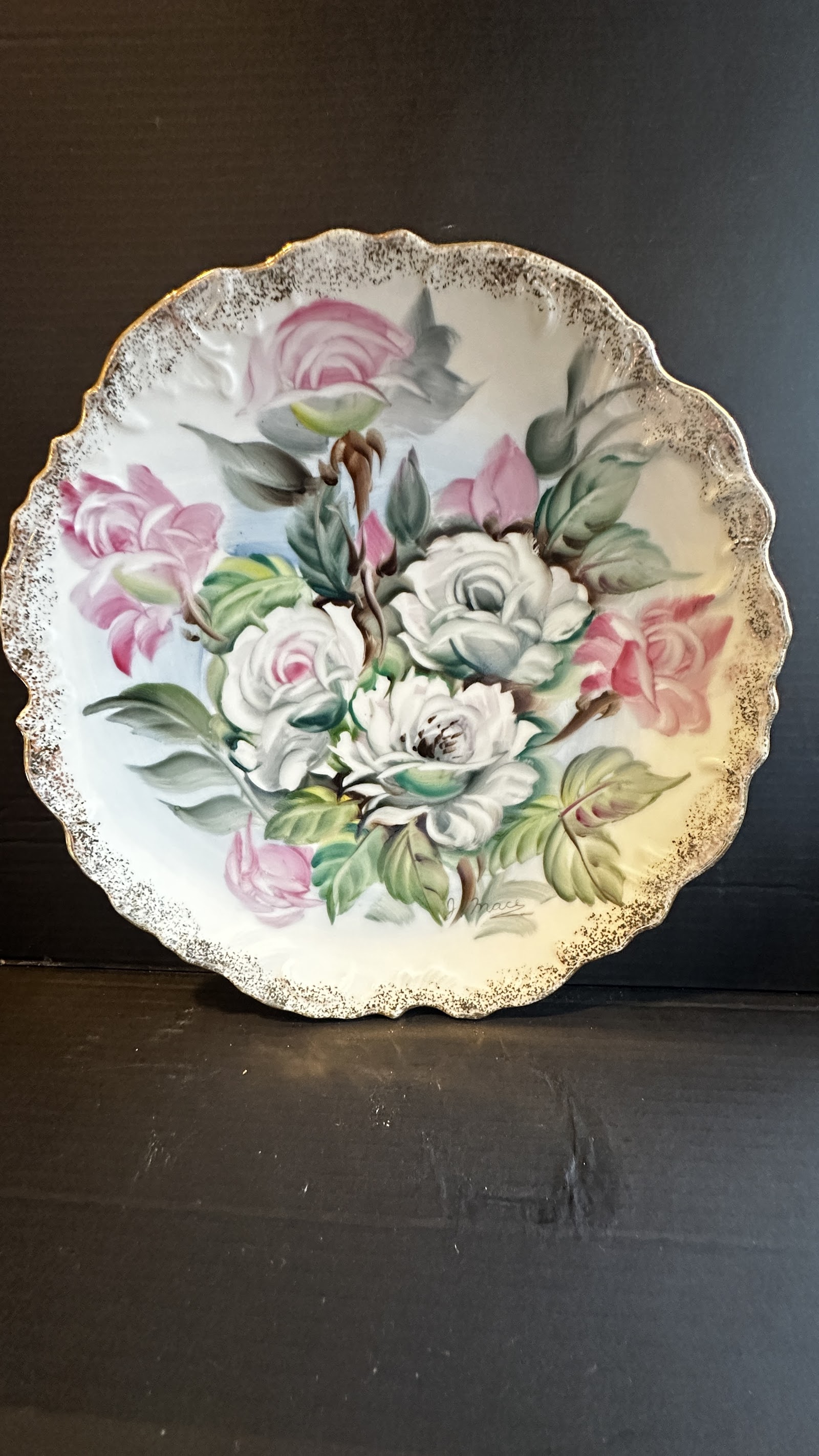
At roughly 10 to 11 inches in diameter, the plate is a confident, display-ready size — large enough to anchor a wall grouping or fill the shallow well of a plate stand on a sideboard. The subject is a lush arrangement of pink and white roses, rendered with the controlled brushwork and layered color that only genuine hand-painting can produce. No two hand-painted pieces are identical, and this one carries the quiet pride of individual craft: you can read the artist's decisions in every petal.
The Signature: "J. Mace" and the Tradition of the Decorative Plate Artist
Centered on the face of the plate, in the manner of academic painters who signed canvases, is the artist signature J. Mace. Amateur and semi-professional china painters were a recognized part of mid-century domestic culture, particularly in the United States and Western Europe. Women's magazines, art clubs, and correspondence schools promoted china painting as a serious craft throughout the first half of the twentieth century, and skilled practitioners developed recognizable hands and local followings. A signed piece like this represents the intersection of that folk tradition with the higher end of decorative production — the artist was confident enough to put their name on the work and expect it to be seen.
Signed decorative plates occupy an interesting niche in the broader antiques market: they are more personal than factory output, more accessible than fine-art oil painting, and deeply satisfying to researchers who enjoy tracking an artist's other known work. Whether J. Mace was a hobbyist of exceptional skill or a working decorative artist remains an open question — and that open question is part of the piece's charm.
Rococo Revival Form: The Scalloped Rim and Gold Sponge-Gilding
The plate's physical form is as considered as its painted surface. The rim is scalloped and embossed in a Rococo Revival style — a design vocabulary that references the elaborate shell-and-scroll ornament of eighteenth-century French decorative arts, filtered through the Victorian Revival sensibility that never quite went away in mid-century tableware and display china. The scalloping gives the silhouette movement and visual interest even before the eye reaches the painted center.
Around the rim, heavy gold sponge-gilding catches the light with a warmth that photograph rarely fully captures. Sponge-gilding, applied with a textured tool rather than a brush, creates an organic, slightly varied gold surface distinct from the flat gold banding of purely industrial ware. On this example, the gold shows the minor thinning and rubbing consistent with decades of careful display — evidence of a life well-lived on a shelf or in a cabinet rather than damage from careless use. The scalloped edges carry slight shelf wear; the face shows minor stacking scratches in keeping with its age. No chips, cracks, or crazing are visible from the front, and the overall impression is of a piece that has been genuinely preserved.
The porcelain itself is consistent with fine china production of the era. Attribution points toward Germany, Bavaria, or Japan — all major sources of quality blank porcelain during the 1950s that was then decorated by artists working independently or in small studios. Bavarian blanks in particular were prized by china painters for their bright white ground and smooth glaze surface.
Display, Collection, and Estate Provenance
This plate came to us as part of a large Disney collector's estate — the kind of carefully assembled household where beautiful objects of all kinds found a home alongside character collectibles. That context is part of its story. It speaks to the taste of an era when people who loved Disney also loved fine things, and when a signed hand-painted plate on the parlor wall was a point of pride.
For today's collector, this piece fits comfortably into several worlds: mid-century decorative arts, Victorian Revival china, signed folk and studio pottery, and floral cabinet plate collecting. It would display beautifully in a traditional or cottage interior, complement a collection of signed china or gilt porcelain, or simply stand alone as the kind of one-of-a-kind handmade object that mass production cannot replicate. At over seventy years old, it carries genuine age and genuine craft — a quiet original from an era that valued both.
Thinking of selling? Get a free, no-obligation offer.
One direct offer on your entire Disney collection — no commission, no auction wait. We help arrange the shipping.