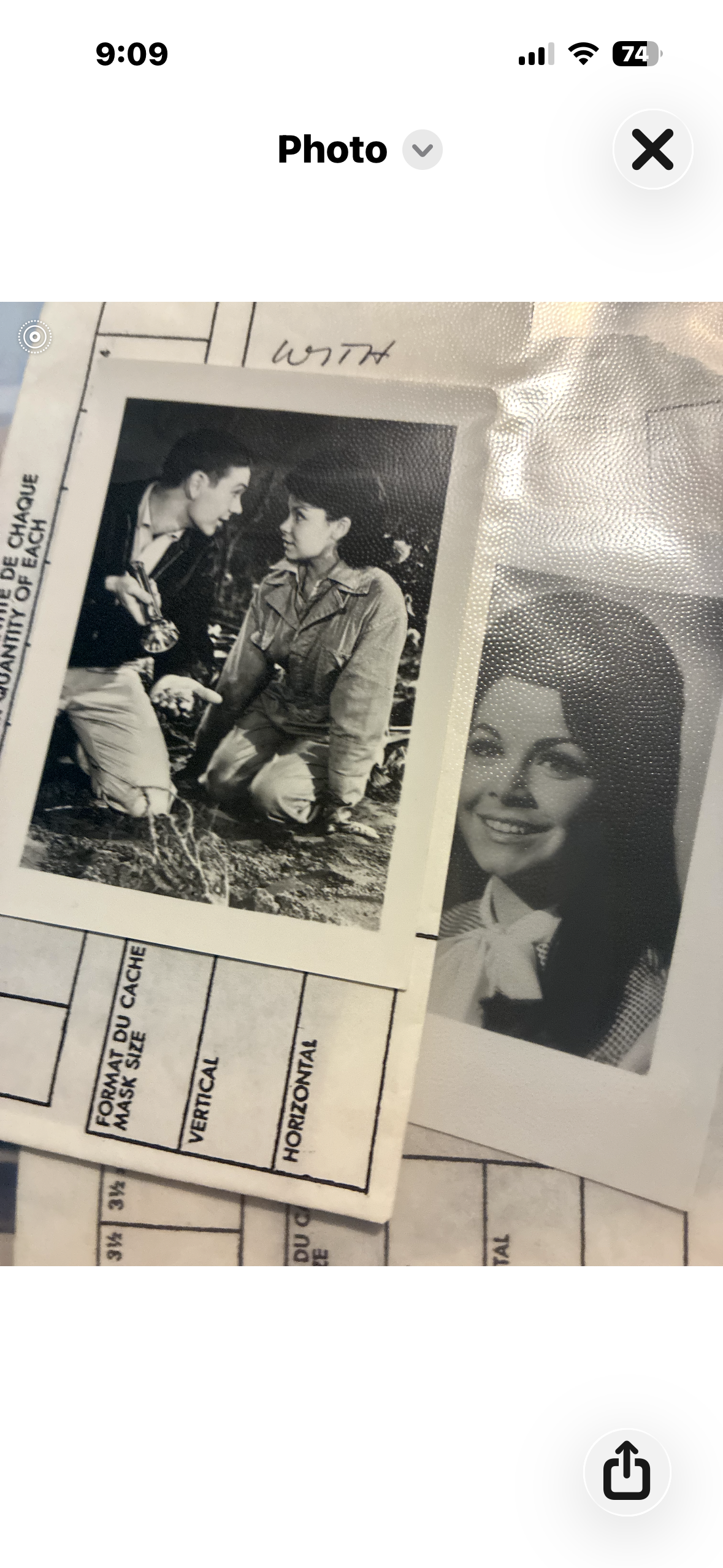
A Window Into the Disney Production Studio
Long before digital workflows, desktop publishing software, and instant file transfers, the creation of Disney's beloved merchandise catalogs, licensing materials, and printed publications required meticulous, hand-crafted precision. Every photograph destined for a brochure, product sheet, or promotional layout had to be carefully sized, cropped, and masked using physical tools — and the people doing that work left behind tangible evidence of their craft. This Walt Disney Productions Photographic Layout and Masking Sheet, dating to the 1960s, is exactly that kind of evidence: a large-format technical document that once guided a production artist through the exacting process of preparing images for print.
The Art and Science of Pre-Digital Photo Production
In the era before computers automated the tedious mechanics of image placement, production departments at major studios and licensing houses relied on a specialized vocabulary of tools and documents. Masking sheets like this one served a critical function: they allowed layout artists to indicate precisely which portions of a photograph should appear in the final printed piece and which should be cropped away. The term "masking" itself refers to the practice of blocking out unwanted areas of an image — a skill that demanded both technical knowledge and a trained visual eye.
What makes this particular document especially compelling is its bilingual French and English text. Walt Disney Productions in the 1960s was a genuinely international enterprise, licensing its characters and imagery across Europe, Latin America, and beyond. French was a primary language for Disney's extensive European publishing and merchandise licensing operations, particularly given the company's deep ties to France and French-speaking markets where Mickey Mouse, Donald Duck, and their companions had been beloved icons since the 1930s. A production document printed in both languages speaks to the global reach of the Disney brand even in that earlier era.
Character and Condition — The Story in the Details
This sheet measures approximately 8.5 by 11 inches or larger — a true working document, not a display piece — and it carries the honest patina of decades spent in a production environment. Yellowing from age is visible across the sheet, the natural consequence of paper chemistry meeting the passage of sixty-plus years. More intriguing still are the handwritten notes reading "WITH" found on the document. These annotations are the fingerprints of a real Disney production artist, someone who worked within the studio's licensing or publishing division and used this very sheet as a guide for a specific job. Such notations are common on surviving production materials and are, for many collectors, the most humanizing detail of all — proof that a living, working hand once touched this paper in the service of bringing Disney imagery to the world.
The Walt Disney Productions imprint itself is historically meaningful. This corporate name was used from 1938 through 1986, when the company rebranded as The Walt Disney Company. Any item carrying the "Walt Disney Productions" mark dates definitively to that nearly five-decade golden span, anchoring it firmly in the era of Walt's personal involvement through the early years of EPCOT and the company's creative renaissance.
Why Collectors Seek Out Disney Production Documents
Most Disney collectibles celebrate the finished product — the animation cel glowing with color, the lithograph framed for the wall, the figurine glazed and posed on a shelf. Production documents occupy a different and rarer category. They are the backstage passes of Disney collecting, artifacts that reveal how the magic was actually made. Relatively few survive outside institutional archives, because working documents were typically discarded once a job was complete. The ones that escaped into the world did so almost by accident — tucked into a desk drawer, filed in a retired employee's personal papers, or preserved within a larger estate collection precisely like the one from which this piece originates.
For collectors drawn to the mechanical and historical side of the Disney legacy — those who want to understand the studio as a working industrial enterprise, not just a dream factory — items like this masking sheet are genuinely irreplaceable. They document a layer of Disney history that is almost never discussed in coffee-table books or museum exhibitions: the anonymous, skilled labor of the production artist, the layout room, the paste-up desk.
This particular sheet comes to us as part of a larger Disney estate collection, a trove of material gathered over decades that brings together items from across the spectrum of Disney's creative and commercial output. Within that broader context, this bilingual masking sheet stands out as a quietly remarkable artifact — modest in size, rich in implication, and utterly authentic in its specificity. It is the kind of object that rewards the collector who pauses to look closely and ask: who made this, and what were they building?
A genuine piece of working Disney studio history, offered now to the collector who understands that sometimes the most fascinating Disney artifacts never appeared on any screen at all.
Thinking of selling? Get a free, no-obligation offer.
One direct offer on your entire Disney collection — no commission, no auction wait. We help arrange the shipping.