A Little Wooden Boy, Balanced in Time
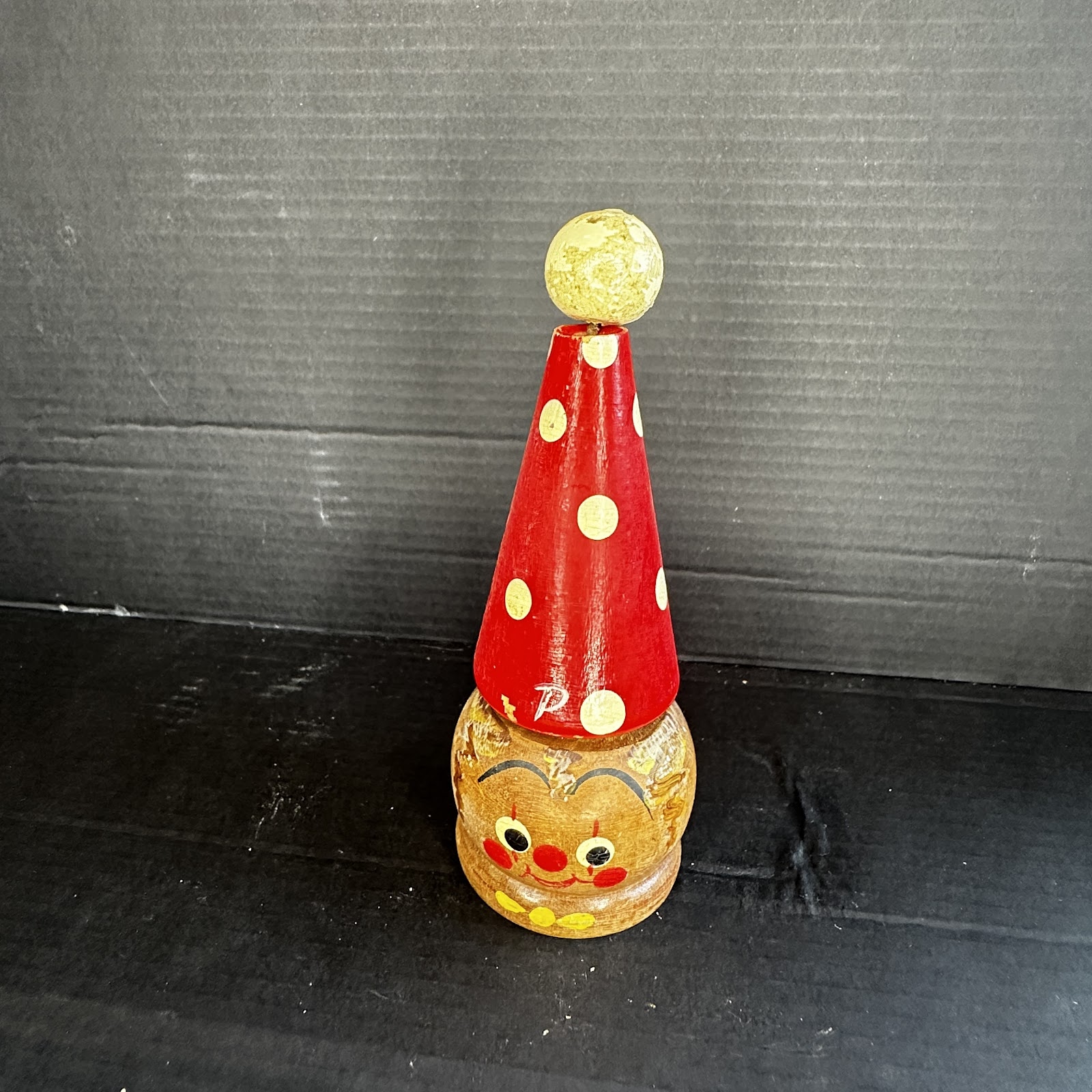
There is something wonderfully fitting about a stacking toy built in the likeness of Pinocchio — a boy who was, himself, assembled piece by piece, brought to life through craft and longing. This charming multi-part turned wood toy captures that spirit with disarming simplicity: a round head base, a conical red hat, and a cheerful yellow spherical pom-pom topper, all stacked and pinned together into a figure that stands roughly five to seven inches tall. The white "P" painted on the front of the hat leaves no doubt who this little fellow is meant to be, and the hand-painted face — large expressive eyes, rosy red cheeks, a broad smiling mouth — radiates the optimistic warmth that made Pinocchio one of Disney's most beloved characters from the very beginning.
The World Pinocchio Came From
Walt Disney's Pinocchio was released in February 1940, and it arrived as a genuine artistic landmark. Based on Carlo Collodi's 1883 Italian novel, the film deepened and humanized the story of the puppet who wanted to be a real boy. The animators achieved a level of technical and emotional sophistication that stunned contemporary audiences, and the film's themes — conscience, temptation, and the meaning of goodness — resonated across generations. Songs like "When You Wish Upon a Star" became cultural touchstones almost instantly, and Jiminy Cricket emerged as one of animation's great scene-stealers. Pinocchio himself, with his Alpine hat, red-feathered cap, yellow shorts, and wide-eyed wonder, became one of the most recognizable character silhouettes in all of Disney's canon.
In the years immediately following the film's release, and continuing through the postwar boom of the late 1940s and 1950s, a wave of Pinocchio merchandise found its way into American homes. Wooden toys held a particular appeal in this era — they felt substantial, honest, and appropriately old-world for a character rooted in Italian folk tradition. Turned-wood construction, the technique used to create this toy's rounded and tapered components, was a well-established craft that toy makers could apply efficiently while still producing objects with genuine tactile charm.
Craftsmanship and Character in the Details
What sets a piece like this apart from the mass-produced plastic merchandise that would come to dominate the Disney licensing landscape in later decades is the evidence of human hands at every stage. The paint application on the facial details — those wide eyes, the flush of color on the cheeks, the curve of the smile — was applied by an individual worker, not extruded from a mold. No two examples from this era are exactly alike, which gives each surviving specimen its own quiet personality. This particular toy carries the honest wear you would expect from something that spent decades in a child's hands or in a household collection: paint showing wear and loss, the surfaces bearing the gentle patina of age.
The toy bears no visible copyright stamps or manufacturer labels, which is not unusual for small wooden novelties of this period. Attribution to Walt Disney Productions is likely based on the character depiction and the stylistic conventions of the era, but the absence of a mark is itself part of the historical record — a reminder that not every licensed or inspired product from the golden age of Disney came with neat documentation. Collectors who specialize in early Disney merchandise know to look past the absence of a stamp and read the object itself: the character, the construction, the palette, the proportions.
Why Collectors Prize Early Disney Wooden Toys
Among the broad landscape of Disney collectibles, wooden toys from the 1940s and 1960s occupy a particularly appealing niche. They are tangible links to the earliest chapters of Disney's merchandise history, when the characters were still new enough to feel genuinely exciting as objects and when toy manufacturing retained a handcraft dimension that later eras would lose. Stacking and balance toys of this type were popular across many character licenses of the period, but the Pinocchio figure carries an extra layer of resonance: a toy that stacks and balances, depicting a character whose own story is about achieving wholeness and stability.
This piece arrived as part of a larger Disney estate collection — a grouping assembled over many decades by someone who clearly understood the appeal of early, character-driven objects made from natural materials. The wear on this toy tells a story of use and love; it was not preserved behind glass but lived with. For the collector who values authenticity and the visible history of an object over pristine condition, that is not a flaw — it is the whole point. Pieces like this connect us directly to the postwar American childhood experience, when a small turned-wood figure on a shelf represented something genuinely magical.
Whether you collect early Pinocchio merchandise, mid-century wooden toys, or simply want a piece that embodies the handmade warmth of Disney's first great decade, this stacking toy offers something rare: an object with genuine age, genuine character, and a smile that has not faded despite everything the years have asked of it.
Thinking of selling? Get a free, no-obligation offer.
One direct offer on your entire Disney collection — no commission, no auction wait. We help arrange the shipping.