A Window Into the 1950s Toy Counter
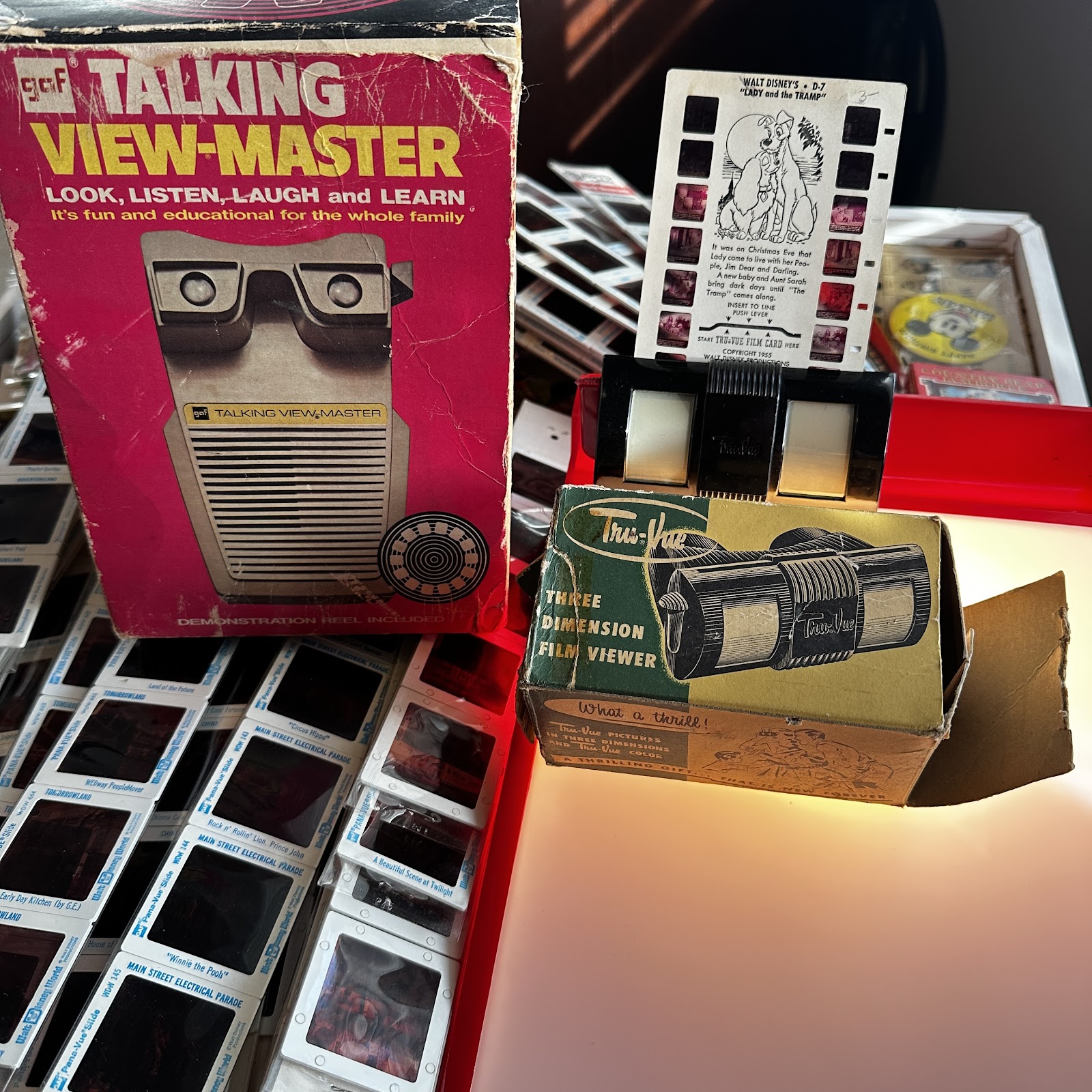
Long before home video, before VHS rental shelves and streaming queues, American children pressed their faces to a very different kind of screen. The Tru-Vue Film Viewer was a slender handheld device — something like a simplified stereoscope — that let kids slip in a strip of black-and-white film cards and peer into a tiny, self-contained world. This original cardboard box, copyright 1955, once housed one of those viewers on a toy store shelf or under a Christmas tree. It is a direct, tangible artifact of mid-century childhood wonder.
The Tru-Vue Company had been producing its film viewers and accompanying filmstrips since the 1930s, building a devoted following through the postwar boom years. By the mid-1950s the product had become a fixture of American toy culture — compact, affordable, and endlessly expandable through the purchase of new film packs. Disney content was among the most popular subject matter available for the format, which is precisely why items like this box turn up so reliably inside Disney estate collections. Families who loved Disney bought Disney Tru-Vue filmstrips, and everything stayed together in the toy box for generations.
The Box Itself: Seventy Years of Character
What survives here is the original packaging — a roughly five-inch-wide, three-inch-tall cardboard box that once protected the viewer inside. The graphics are quintessentially 1950s: bold, optimistic lettering and the exuberant marketing copy "What a thrill!" splashed across the surface in the breathless style of the era. The copyright date 1955 is printed on the side panel, anchoring this piece firmly to the Eisenhower years, when American consumer culture was hitting its stride and toys were becoming an industry unto themselves.
Honesty is part of what makes vintage paper ephemera collectible, and this box wears its age plainly. There is significant tearing on the right-side flap, heavy edge wear around all corners, and discoloration or staining on the top surface. The box has gone slightly misshapen over its seven decades of existence. None of that is a flaw in the collector's sense — it is evidence. Evidence that this box lived in a real home, was handled by real children, and survived intact when countless identical examples did not. Crucially, the graphics remain legible, which is the minimum threshold for paper collectibles of this age to retain visual and historical interest.
Why Collectors Seek Vintage Tru-Vue Packaging
Most surviving Tru-Vue material in collector hands consists of the filmstrip cards themselves, loose or in their thin paper sleeves. Complete viewers in working condition are rarer. But the original retail boxes — the packaging that predates the purchase, that sat on the shelf and made the pitch — are rarer still. Cardboard is fragile. Boxes get thrown away, recycled, or simply fall apart. A box that has held together well enough for the printed graphics to survive intact is genuinely uncommon.
For Disney memorabilia collectors specifically, Tru-Vue material occupies an interesting niche. It predates the explosion of licensed merchandise that would characterize the 1960s and beyond. These early viewer sets and their packaging represent a moment when Disney's image was still being negotiated with a relatively small number of toy and novelty partners — a more curated, less saturated licensing landscape. Owning a piece of that era feels different from owning a later mass-market item. It connects to the years when Disneyland was brand new, when Cinderella and Peter Pan were still fresh in theaters, and when a handheld viewer full of tiny film frames was genuinely cutting-edge home entertainment.
From a Disney Estate Collection
This box arrived as part of a larger Disney estate collection — the kind of assemblage that only comes together over a lifetime of deliberate, affectionate collecting. Estate collections like this one are time capsules. Items were acquired at the height of their original cultural moment and then kept, stored, and preserved through decades of changing fashions. The Tru-Vue box was almost certainly not the centerpiece of the collection; it was the supporting cast, the contextual piece, the thing that tells you something true about how people engaged with Disney entertainment in the 1950s.
That is precisely why it belongs in a serious Disney collection today. The characters are generic — the box graphics are promotional rather than character-specific — but the artifact is anything but generic. It is a document of a specific moment in American toy history, Disney licensing history, and the history of visual entertainment itself. For the collector who wants to tell a complete story of mid-century Disney fandom, a worn, honest, copyright-1955 Tru-Vue box is exactly the kind of piece that makes the display case feel real.
Thinking of selling? Get a free, no-obligation offer.
One direct offer on your entire Disney collection — no commission, no auction wait. We help arrange the shipping.