When Disney Went to War
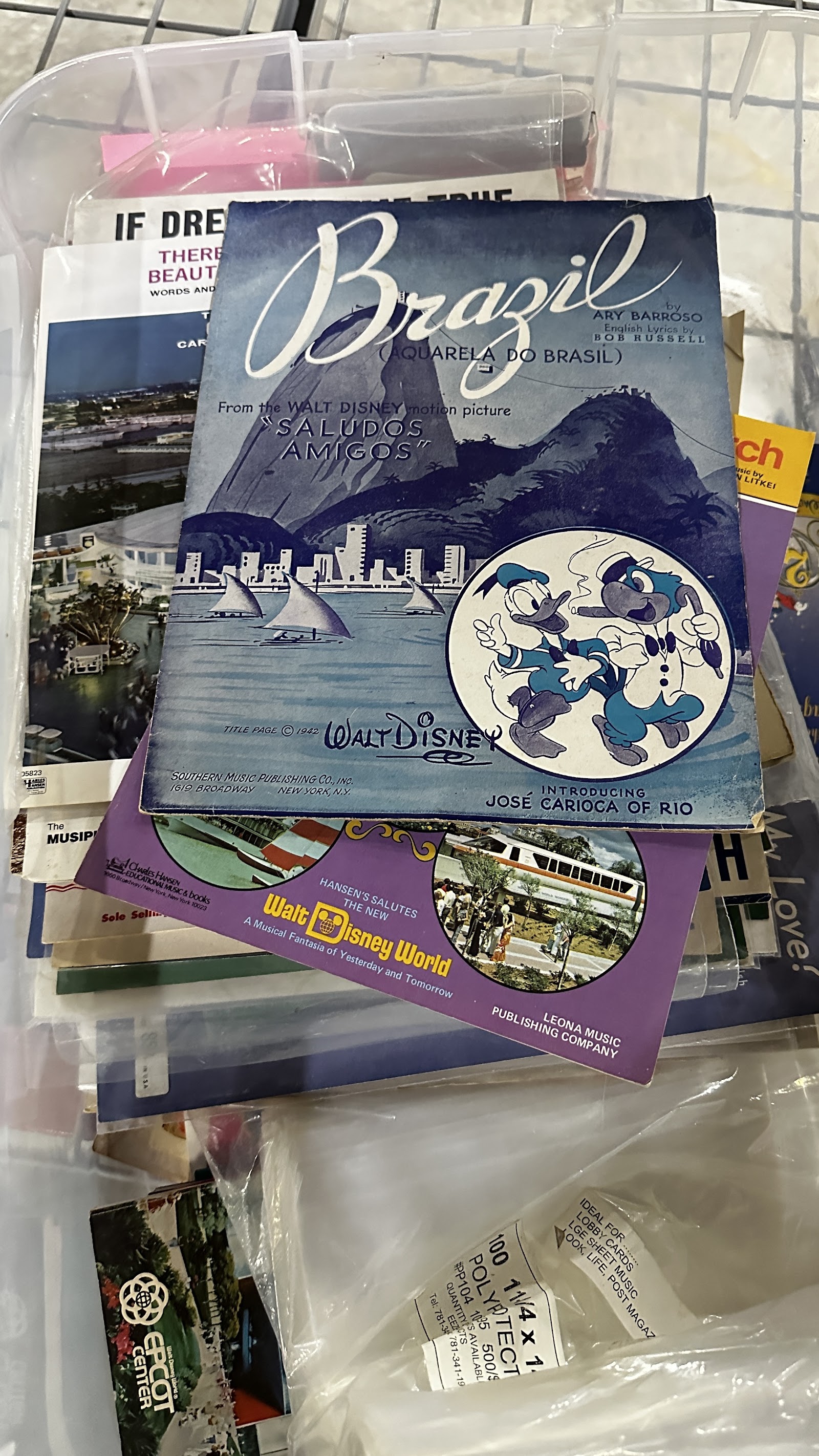
Few chapters in the Walt Disney Company's history are as remarkable — or as little-known to casual fans — as its role during the Second World War. Within weeks of the attack on Pearl Harbor in December 1941, the U.S. military effectively commandeered the Disney studio in Burbank, and Walt Disney himself redirected the full creative power of his organization toward the war effort. By the end of the conflict, Disney had produced hundreds of training films, propaganda shorts, and morale-boosting materials for the Allied cause. The studio created insignia for military units, educational films for the Army and Navy, and a flood of wartime consumer products that brought beloved Disney characters into the national conversation about sacrifice and victory. This piece of original sheet music is a tangible fragment of that extraordinary moment.
Sheet Music as a Home-Front Artifact
In the 1940s, before television filled the American living room, sheet music was a genuine cultural currency. Families gathered around upright pianos on weekend evenings; school choirs rehearsed from printed scores; community sing-alongs were a staple of civic life. Publishers understood that tying a popular song to recognizable imagery — and to the era's dominant emotional register of patriotism and shared purpose — was a reliable formula. Disney characters, already beloved for their association with innocence, optimism, and humor, translated naturally into wartime messaging. A title featuring Mickey Mouse, Donald Duck, or the full Disney ensemble carrying a patriotic theme could move copies in five-and-dimes and music shops across the country, serving simultaneously as entertainment, propaganda, and keepsake.
The paper itself tells part of the story. The age yellowing and edge wear visible on this piece are not flaws — they are credentials. Eighty-plus years of American household life have left their mark: the slight foxing, the softened corners, the warm cream tone that only genuine 1940s paper stock develops. Reproduction copies, however skilled, cannot replicate this particular quality of time. For the serious ephemera collector, that patina is the whole point.
Disney's Wartime Characters and Their Cultural Weight
Donald Duck may be the defining Disney character of the wartime years. His 1943 Oscar-winning short Der Fuehrer's Face — in which Donald dreams he is a factory worker in a fascist state — remains one of the most direct pieces of anti-Axis satire produced by any American studio. Pluto, Goofy, and even the Seven Dwarfs appeared in war-bond promotions and Victory Garden campaigns. Mickey Mouse, though Walt deliberately kept him somewhat above the fray (protecting the character's universal commercial appeal), appeared in military insignia by the thousands. The Disney studio estimated that by 1943 it had produced insignia artwork for more than 1,200 military organizations.
Sheet music that channels this energy captures the intersection of popular culture and national emergency in a way that few other formats can. Unlike a poster, which hung on a wall and was discarded, or a film, which existed only in the theater, sheet music was used — touched, turned, played, sung. It moved through hands. It lived in piano benches. The copy that survives today survived precisely because someone valued it enough to keep it.
Condition, Collectibility, and the Estate Context
This sheet music comes to us as part of a larger Disney estate collection — an assemblage gathered over decades by someone whose affection for the Disney legacy ran deep enough to include not just the obvious ceramic figurines and lithographs but the more understated paper ephemera that serious scholars and advanced collectors prize. Wartime Disney material occupies a specific and respected niche in the broader Disney collectibles market: it is historically significant in a way that post-war material rarely achieves, connecting the brand's creative output to one of the defining events of the twentieth century.
The condition here is consistent with authentic 1940s paper stock — yellowing, some edge wear — which is exactly what any reputable buyer should expect and want from an eighty-year-old printed piece. Archival storage in a flat, acid-free sleeve is recommended. Framed behind UV-protective glass, a piece like this reads beautifully as both decorative object and historical document. It suits a dedicated Disney room, a mid-century Americana display, or a wartime memorabilia collection. For the researcher or historian, it is primary source material. For the Disney collector, it is the studio at its most serious and its most human.
Original wartime Disney paper ephemera surfaces less and less often in intact condition. Most copies were used until they fell apart, discarded in postwar cleanouts, or simply lost to time. The fact that this example has traveled eighty years to reach you is, itself, a small piece of American history worth honoring.
Thinking of selling? Get a free, no-obligation offer.
One direct offer on your entire Disney collection — no commission, no auction wait. We help arrange the shipping.