A Sunny Slice of the Hundred Acre Wood
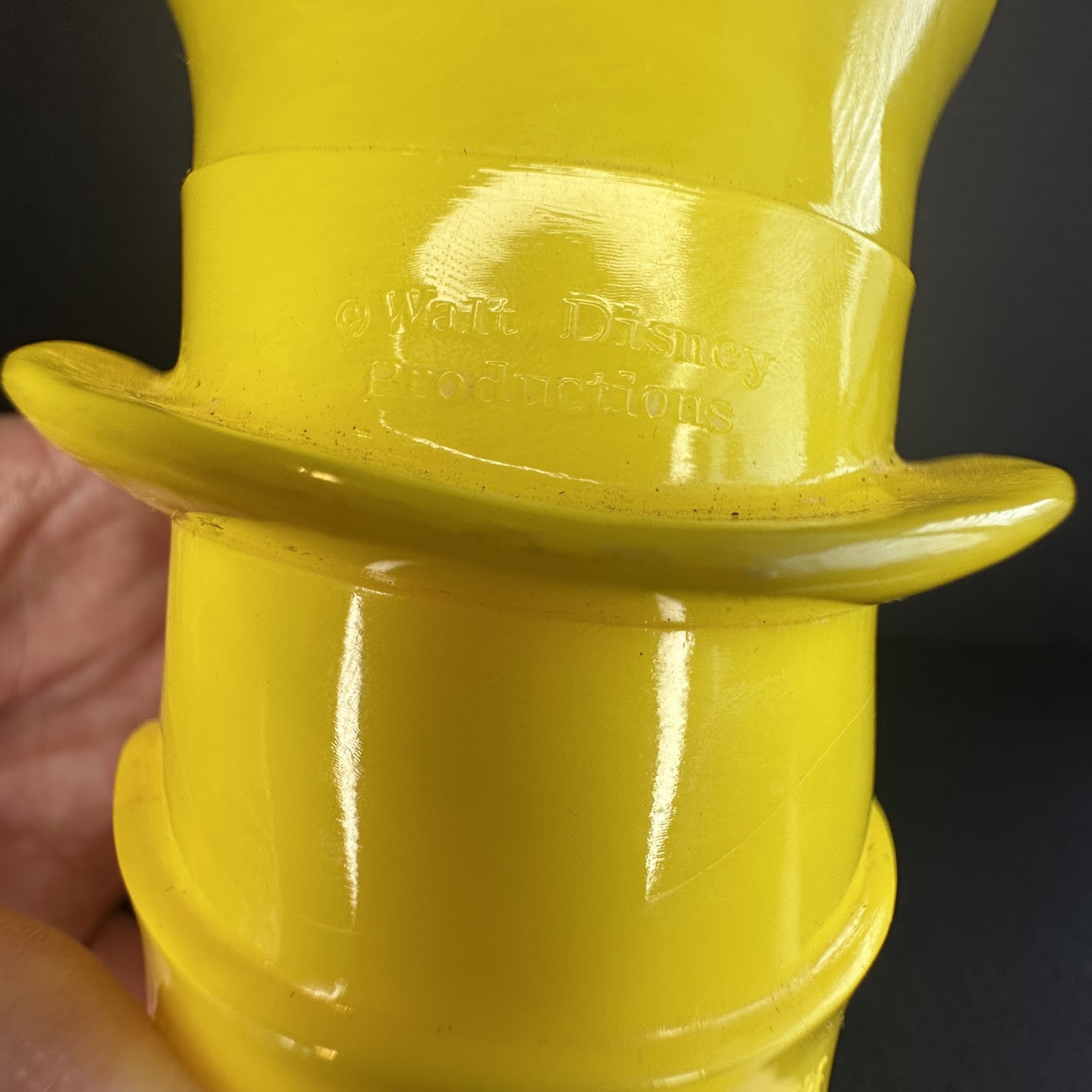
There is something immediately disarming about this cheerful yellow molded plastic piece from the golden age of Walt Disney Productions licensing. Rounded, glossy, and wearing its decades lightly, it carries that unmistakable warm-honey hue that has always belonged to one bear above all others: Winnie the Pooh. Whether it served life as part of a piggy bank, a planter, or another beloved tabletop companion, the piece radiates the quiet domesticity that made Pooh merchandise a fixture in nurseries, playrooms, and family kitchens from coast to coast throughout the 1970s and into the early 1980s.
The Era That Made Pooh a Household Name
Disney's relationship with A. A. Milne's Pooh stories began in earnest with Winnie the Pooh and the Honey Tree in 1966, the first of three celebrated featurettes that would eventually be compiled into The Many Adventures of Winnie the Pooh in 1977. That theatrical compilation arrived right at the moment American families were buying color televisions, decorating suburban homes, and seeking out licensed products that brought the magic indoors. The timing was perfect. Through the late 1970s and early 1980s, Walt Disney Productions licensed a sprawling ecosystem of Pooh goods — ceramics, banks, planters, music boxes, plush, and dozens of molded plastic novelties — all bearing that embossed copyright mark on the back.
The copyright stamp on this piece — © Walt Disney Productions — dates it firmly to the pre-1986 era, before the company transitioned to the now-familiar "The Walt Disney Company" mark. For collectors, that four-word phrase is a reliable timestamp and a badge of authenticity, connecting the object directly to the studio's output under a specific corporate identity that spanned Walt's final years and the decades immediately after his passing in 1966.
What This Piece Tells Collectors
Molded PVC and hard vinyl Disney pieces from this window are increasingly sought after precisely because so few survived in presentable condition. They were made to be used — handled by children, perched on windowsills in direct sunlight, filled with coins, watered with plants. The attrition rate was high. A piece that has come through fifty-plus years with its form intact, its gloss largely present, and its copyright mark legible is doing better than most of its contemporaries.
The honest condition notes here tell the story of a life actually lived: surface grime settled into crevices (the natural result of decades on a shelf), fine scratches distributed across the glossy finish, and minor scuff marks on the lower sections where a surface met the piece again and again over the years. None of this is damage in the collector's pejorative sense — it is evidence. Evidence that this object existed in a real home, was cherished by real people, and has arrived here with its character and structure fully intact. That kind of honest wear is far preferable, to many collectors, over a piece that has been harshly cleaned or artificially brightened.
The estimated scale — roughly six to ten inches — puts it in the range of a meaningful display object rather than a small trinket. At that size, the molded detail reads across a bookshelf or a vitrine, and the yellow finish catches light in the way that draws the eye.
From a Disney Estate Collection
This piece arrived as part of a larger Disney estate collection, assembled by someone with a clear affection for the character-driven, tactile merchandise of the 1970s and 1980s. Estate collections like this one are where the most interesting objects tend to surface — items that were purchased new, kept with genuine care, and never circulated through the secondary market. They preserve not just the object but something of its original context: the taste and enthusiasm of a collector who understood, even before the wider market caught on, that these cheerful licensed pieces were worth keeping.
For anyone building a focused Winnie the Pooh collection, or assembling a broader survey of Walt Disney Productions-era licensing, a piece like this one earns its place. It is specific to an era, specific to a character, and shaped by the kind of everyday life that mass-market Disney collectibles were always designed to accompany. The Hundred Acre Wood was always meant to feel like home — and for a few decades, pieces like this one made sure it did.
Thinking of selling? Get a free, no-obligation offer.
One direct offer on your entire Disney collection — no commission, no auction wait. We help arrange the shipping.