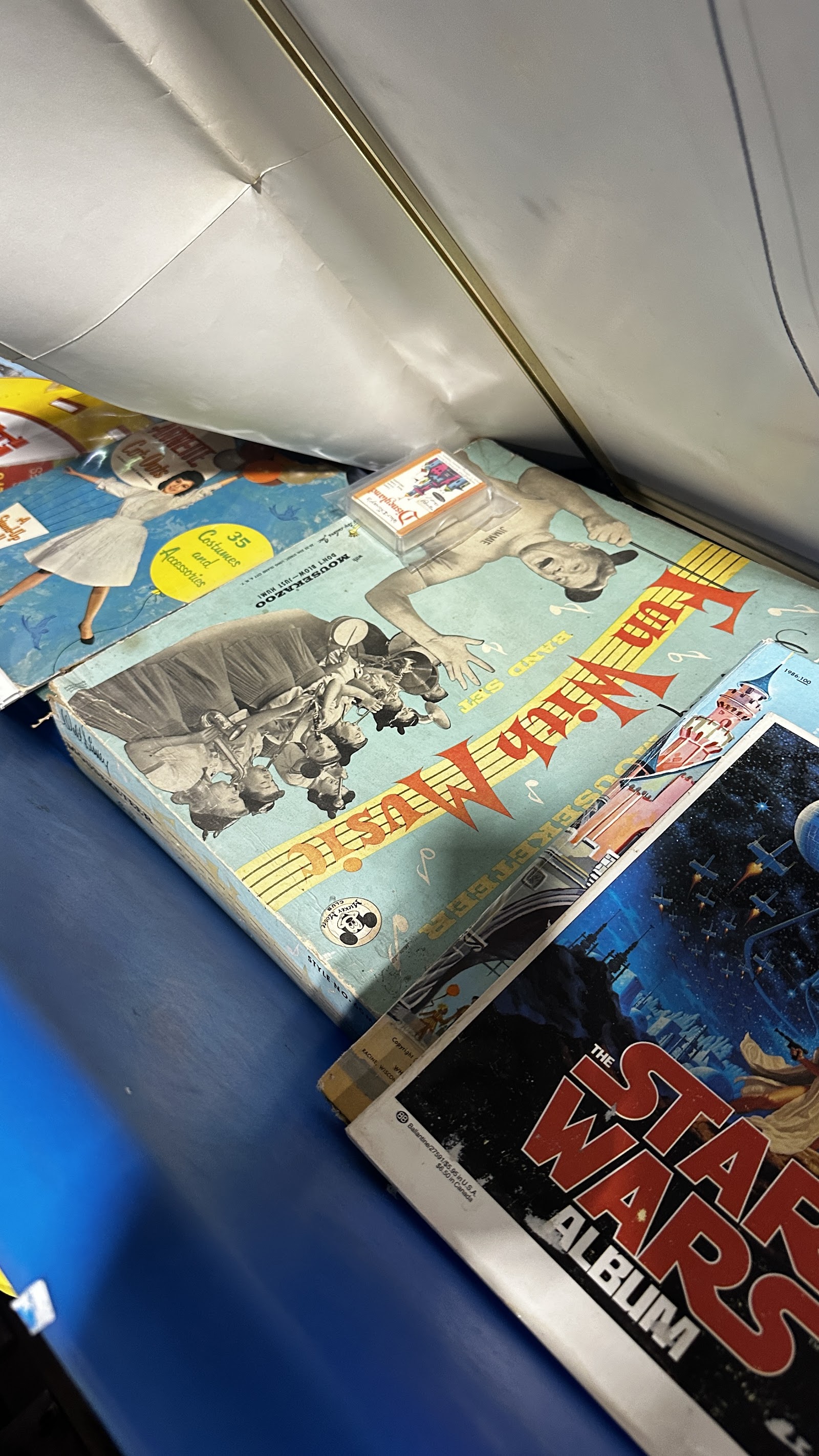
A Time Capsule in Paper and Print
Long before digital passes and smartphone apps replaced the crinkle of folded paper in a shirt pocket, every trip to a Disney park began with something tangible: a ticket punched at the turnstile, a trail map spread across a stroller tray, a souvenir program dog-eared at a favorite page. This collection of vintage Disney park ephemera, spanning roughly three decades from the 1960s through the 1990s, gathers all of those sensory memories into one remarkable archive. Ticket stubs, attraction maps, special-event programs, and assorted promotional paper goods — the humble paperwork of enchantment — are united here from a single estate, each piece a small window back into the living history of the parks.
Paper by its nature is fragile, and Disney park ephemera was never meant to survive. It was meant to be tucked into a purse, handed to a child, read on the monorail, and eventually forgotten in a junk drawer. That so much of it endures is itself a small miracle, and it is precisely that survival against the odds that makes collectors pursue it so avidly. Condition naturally varies across the pieces in this collection — some bear the pleasant patina of a well-loved souvenir, while others have kept their colors with remarkable freshness — but taken together they form a vivid panoramic portrait of Disney park culture across its most transformative era.
The Golden Age of Disney Park Paper
Disneyland opened in Anaheim in July 1955, but it was the 1960s that brought the park's signature graphic language to full maturity. The decade saw the arrival of attractions that would define Disneyland for generations — the Haunted Mansion, Pirates of the Caribbean, the Matterhorn Bobsleds — and the park's printed materials grew to match that ambition. Guides from this era are typeset in the confident mid-century sans-serif hand that feels simultaneously of its moment and somehow timeless. The ticket book system — the famous A through E coupon books, with the coveted E-ticket reserved for the biggest rides — generated millions of individual stubs, yet complete books or significant partial books from the early years now command serious attention from collectors.
The 1971 opening of Walt Disney World in Florida doubled the universe of collectible park paper overnight. New maps were needed for the Magic Kingdom, new programs for the grand-opening season, new promotional mailers for travel agents and families. The 1970s and 1980s brought EPCOT Center (1982) and Disney-MGM Studios (1989), each launch producing its own wave of commemorative and day-of printed matter. By the 1990s the parks were issuing commemorative guides for anniversaries, special promotional tie-ins with sponsors, and limited-edition programs for ticketed events — the paper trail grew richer and more varied with every passing season.
Why Collectors Treasure Park Ephemera
There is a school of collecting that prizes the official merchandise — the ceramic figurines, the limited-edition pins, the numbered lithographs — and there is another school that gravitates toward ephemera precisely because it was never supposed to matter. Park maps capture the layout of lands and attractions exactly as they existed on a specific day; they are the only documentary evidence we have of how things looked before a renovation, before an attraction closed, before a corner of the park was reimagined. A Tomorrowland map from the late 1960s shows a vision of the future that is now its own form of nostalgia. A program from a Mickey Mouse Club anniversary celebration freezes a moment of communal Disney fandom that can never be recreated.
Ticket stubs carry perhaps the most personal charge of all. Each one was literally touched by the hands of a guest on one particular day, clipped by a uniformed cast member at the entrance to one particular attraction. Holding a stub from Space Mountain's inaugural years or from a long-closed classic like the Flying Saucers is as close as most of us will ever get to stepping back through the turnstile ourselves. For that reason, condition — while always a factor — is often secondary to authenticity and era for the most passionate ephemera collectors.
An Estate Collection, Intact and Unfiltered
What distinguishes this grouping is its provenance as a single estate collection, assembled by one person or family over the course of visits spanning roughly thirty years. Estate collections carry a coherence that bulk-sourced lots rarely achieve: the same sensibility guided every addition, and the pieces have been together long enough to tell a collective story. Maps and stubs from early Disneyland visits sit alongside EPCOT opening-era programs and 1990s promotional materials, chronicling a family's relationship with Disney across multiple generations of the parks themselves.
Sorting and individual cataloging will reveal the full depth of what is here — experienced eyes may find standout items that warrant separate attention. But even before that process begins, the collection as a whole has immediate value for the researcher, the display collector seeking a broad sweep of park history, or the dealer looking to source multiple decades of material from a single trusted origin. Disney park ephemera has never been more sought-after, and original paper from the 1960s and 1970s in particular grows harder to find with each passing year.
From the hand-lettered maps of early Disneyland to the glossy promotional programs of the EPCOT era, this collection is a tangible record of the parks at their most transformative. Few categories of Disney collecting reward patient attention quite like ephemera — and few estates offer a window this wide.
Thinking of selling? Get a free, no-obligation offer.
One direct offer on your entire Disney collection — no commission, no auction wait. We help arrange the shipping.