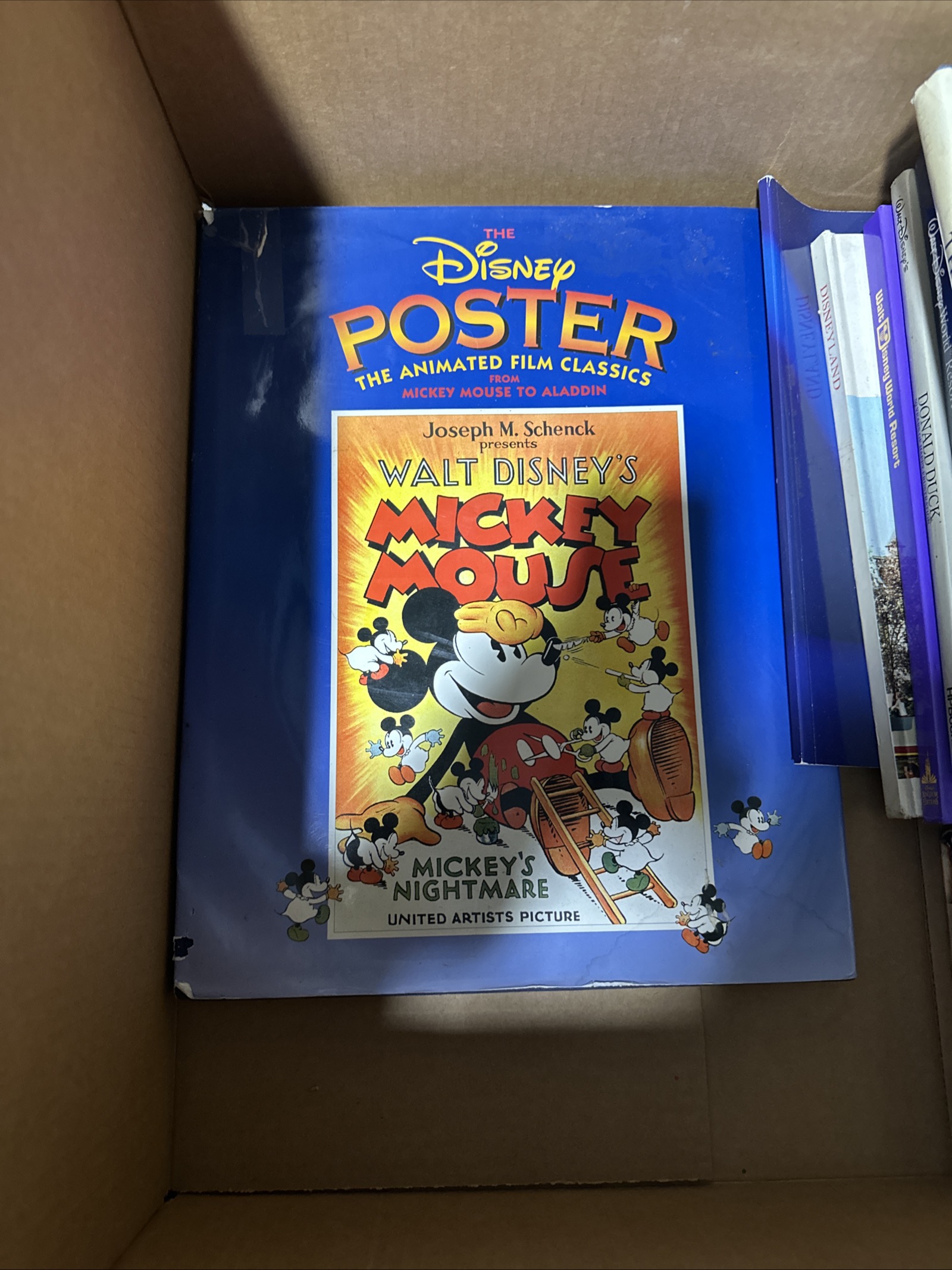
A Gallery Between Two Covers
There is a particular kind of Disney book that transcends the gift-shop shelf and earns a permanent place on the coffee table — the oversized, lavishly illustrated art volume that feels less like a book and more like a portable museum. The Disney Poster: The Animated Film Classics from Mickey Mouse to Aladdin, published by Hyperion in 1993, is exactly that kind of object. Measuring a generous eleven by fourteen inches and printed on heavy cardstock-weight pages, it gathers full-page reproductions of some of the most iconic theatrical poster art ever produced by the Walt Disney Company, spanning more than six decades of animated filmmaking.
The timing of its publication matters. Nineteen ninety-three sat squarely inside what fans and historians call the Disney Renaissance — that extraordinary creative surge that began with The Little Mermaid in 1989, crested with Beauty and the Beast and Aladdin, and would carry through to The Lion King the following year. Aladdin himself appears in this volume's subtitle, a deliberate signal that this was a living tradition being celebrated, not merely a nostalgic archive. The book captured the continuum: from the earliest hand-lettered one-sheets promoting a certain cheerful mouse in the late 1920s all the way to the bold, graphic sensibility of early-90s theatrical marketing.
The Art of the Disney One-Sheet
Theatrical poster art occupies a unique niche in Disney collectibility. Unlike cels, which were functional production artifacts, or merchandise, which was designed for mass consumption, movie posters were created with a single, urgent purpose: to stop a passerby in their tracks and sell a dream. Disney's poster artists — working in concert with the studio's story and art departments — developed a visual language that was entirely their own. Bold color fields, expressive character silhouettes, and a compositional energy that communicated joy, danger, and wonder all at once.
By collecting these images in a large-format book, Hyperion allowed collectors and fans to study them at something close to their original intended scale. A Mickey Mouse one-sheet from Steamboat Willie's era looks very different at eleven inches wide than it does squeezed onto a paperback page. The printing quality in volumes like this one was carefully considered — the glossy blue cover itself signals that the publisher understood the images deserved a presentation that honored their graphic weight. For students of animation history, graphic design, and Disney lore alike, a book like this functions as a primary visual reference.
Mickey, Aladdin, and Everyone Between
The sweep of characters represented inside mirrors the sweep of Disney's animated legacy. Mickey Mouse anchors the beginning — his earliest theatrical appearances defined not just a character but an entire philosophy of entertainment built on charm, timing, and a certain irreverent wit. From there, the reader moves through the decades: the fairy-tale grandeur of Snow White and Cinderella, the experimental ambition of Fantasia, the adventure serials of the wartime package films, the Silver Age classics of the 1960s and 70s, and finally the Renaissance masterworks.
Aladdin, released the year before this book went to press, represented a high-water mark of that Renaissance era — a film that blended traditional hand-drawn animation with early computer-assisted backgrounds, boasted a showstopping vocal performance, and produced marketing imagery that was kinetic, colorful, and instantly recognizable. Seeing its poster art sit alongside a one-sheet for Bambi or Dumbo within the same volume is a reminder of how coherent Disney's visual identity remained across half a century of change.
From the Estate Collection: A Well-Loved Copy
This particular copy comes to us as part of a larger Disney estate collection — the assembled lifetime enthusiasm of a dedicated fan. Books like this one tend to accumulate the honest evidence of that enthusiasm: this copy shows shelf wear along its edges, minor corner blunting, and some surface scuffing on the glossy blue cover. There is adhesive tape visible at the top-left corner of the front cover — a detail worth knowing, as attempting removal may lift the surface, and we recommend leaving it in place. The binding remains intact and the book appears complete throughout.
For the purist, condition imperfections like these tell a story of genuine use — this was not a book kept sealed in a sleeve. It was opened, consulted, shown to friends, and appreciated. For the collector seeking a display-quality reference copy, those same marks set realistic expectations. Either way, the interior content — those full-page poster reproductions — remains the point, and the pages themselves appear free of the kind of damage that would compromise the reading experience.
Softcover large-format art books from the early 1990s occupy an interesting place in the Disney collectibles market. They were produced in meaningful but not unlimited quantities, and their size and format make them genuinely difficult to find in high condition. A copy from a dedicated collection, even one with the wear this one shows, is a real find for anyone building a Disney art and animation library.
Thinking of selling? Get a free, no-obligation offer.
One direct offer on your entire Disney collection — no commission, no auction wait. We help arrange the shipping.