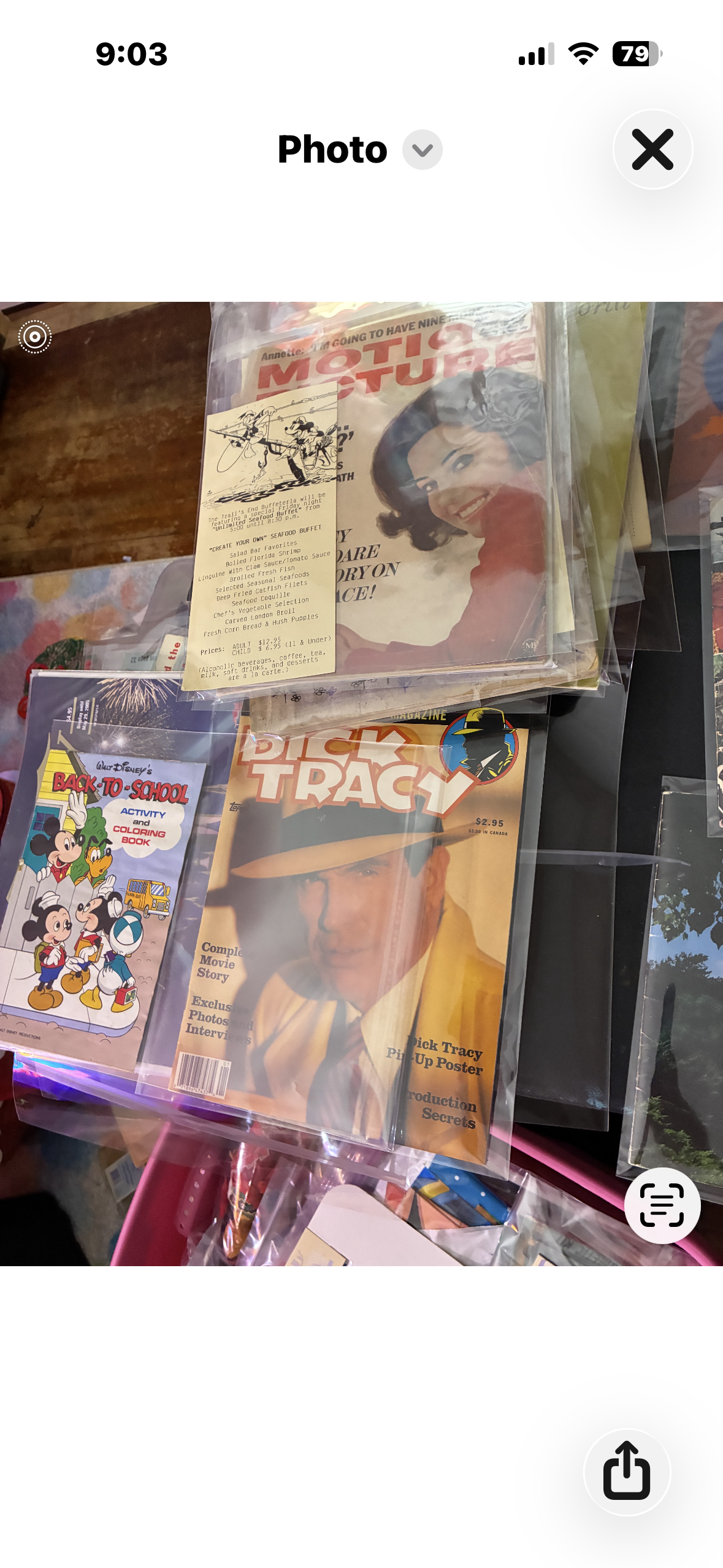
America's Sweetheart on the Newsstand
Long before she was a beach movie icon, Annette Funicello was simply Annette — the one Mouseketeer so beloved that Walt Disney himself took a personal interest in her career. By the early 1960s, her face on a magazine cover wasn't just good editorial; it was a guarantee of newsstand sell-through. This vintage Motion Picture Magazine issue, dating to the Silver Age early 1960s, features a striking close-up portrait of Funicello at the height of her crossover celebrity — fresh-faced, luminous, and utterly of her moment.
Motion Picture Magazine was one of the most enduring fan publications in Hollywood history, tracing its roots back to the silent era and remaining a fixture on drugstore racks well into the decade that gave us the British Invasion and Technicolor beach epics. For readers of the early 1960s, flipping to a page anchored by Annette's portrait was as natural as tuning into American Bandstand. She was everywhere — and for good reason.
From the Mousketeer Stage to the Silver Screen
Annette Funicello's story is one of Disney's most human triumphs. Discovered by Walt Disney himself at a school performance when she was just twelve years old, she debuted on The Mickey Mouse Club in 1955 and became the show's undisputed star. Fan mail poured in by the tens of thousands. Walt was so protective of her wholesome image that he personally vetoed roles and costumes he felt were inappropriate — a degree of personal attention he extended to virtually no other performer on his roster.
By the early 1960s, Annette had graduated gracefully from television teenager to recording artist and film actress. Her singles climbed the pop charts, and her transition to the Beach Party film series alongside Frankie Avalon cemented her status as a defining figure of early-decade youth culture. The magazines of the era tracked every step: the new hairstyle, the co-star rumor, the question of whether she'd ever fully leave Disney's orbit. She never really did — and that loyalty to her origins is a large part of why collectors still cherish her memorabilia today.
What Makes This Issue a Collector's Piece
Fan magazines of the Silver Age occupy a fascinating niche in pop-culture collecting. They are primary documents — printed on the week they were relevant, shaped by the gossip and glamour of their precise cultural moment, and rarely preserved with any intention of longevity. Paper yellows, covers crease, and staplings rust. A copy that has survived six decades in readable, display-worthy condition carries with it the quiet miracle of having escaped the recycling bin, the flood, and the neglect that claimed so many of its print-run siblings.
For Annette Funicello collectors specifically, magazine appearances from the 1960–1964 window represent a particularly fertile period. These were the years of her peak commercial visibility outside of Disney's direct control — the years when her image belonged equally to the Disney legacy and to the broader pop marketplace. A close-up portrait cover or feature spread from Motion Picture Magazine captures her at that precise intersection, making it genuinely distinct from the Mouseketeer merchandise that defines her earlier period.
Disney Legends — a formal honorific bestowed by The Walt Disney Company — are relatively few in number, and Annette holds the distinction with particular warmth in the hearts of fans. Any artifact that documents her career trajectory carries the reflected glow of that legacy status.
From an Estate Collection to Your Shelf
This copy comes to us as part of a larger Disney estate collection — the kind of assembled archive that takes a lifetime to build and represents genuine devotion rather than casual accumulation. Estate pieces like this one carry an invisible history: carefully stored, deliberately kept, chosen over years of searching through stacks at flea markets or swapping with fellow enthusiasts. Someone cared enough to hold onto it.
Whether you display it in a frame alongside other Silver Age Disney ephemera, file it in your Annette Funicello collection, or add it to a broader survey of 1960s entertainment magazines, this issue brings an immediate sense of era to any shelf it occupies. The close-up portrait format means the cover reads across a room — warm, confident, and unmistakably of its decade. For the Disney collector, the pop-culture historian, or simply anyone who grew up watching reruns of The Mickey Mouse Club and wondering what became of that girl with the big brown eyes, this is a small but meaningful piece of the answer.
Thinking of selling? Get a free, no-obligation offer.
One direct offer on your entire Disney collection — no commission, no auction wait. We help arrange the shipping.