A Plush from the Golden Age of Disney Licensing
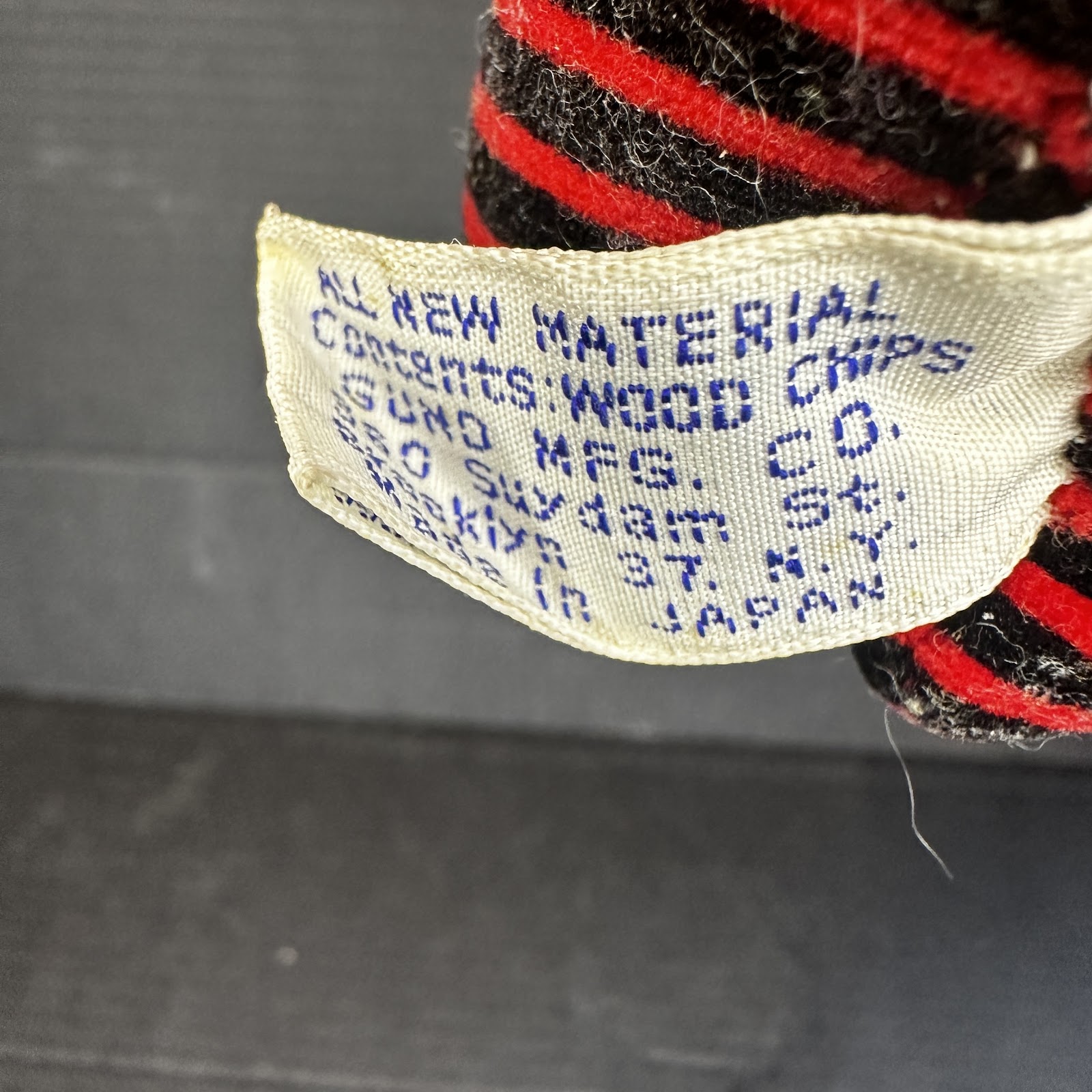
Long before plush toys became mass-produced shelf fillers, a child's stuffed Mickey or Minnie Mouse was a genuine treasure — stitched with care, tagged with pride, and built to last. This Gund character plush dates to the period between 1950 and 1963, a window we can pin down thanks to a telling detail on its hang tag: a pre-ZIP-code address. The United States Postal Service introduced ZIP codes in July 1963, and manufacturers who printed their addresses without them were doing so before that moment. It is one of the small, wonderfully precise ways a tag becomes a timestamp.
Gund Mfg Co and the Disney Connection
The Gund Manufacturing Company has one of the longest, most respected histories in the American plush toy industry. Founded in 1898 by Adolph Gund, the company built its reputation on quality construction and imaginative character work. By the postwar era, Gund held coveted licenses to produce Disney character plush — a relationship that put Mickey and Minnie into millions of American living rooms and nurseries throughout the 1950s and into the early 1960s.
Disney licensing in this era was carefully controlled. The Walt Disney Company had learned hard lessons in the 1930s when unlicensed knockoffs flooded the market after Mickey's explosive rise to fame. By the postwar boom years, authorized manufacturers like Gund wore their Disney approval as a badge of honor — and collectors today recognize the difference immediately. A genuine Gund Disney plush from this period carries the weight of that official relationship: the proportions are faithful to the on-screen character, and the materials, while humble by modern standards, were the best available at the time.
Wood Chip Fill and the Craft of an Earlier Era
One of the most evocative details of this plush is its stuffing. Wood chip fill — sometimes called excelsior or wood wool — was the standard interior material for plush and stuffed toys well into the postwar period. Finely shaved wood fibers gave toys a satisfying firmness and heft that polyester fiberfill, which became dominant in the 1960s and 1970s, simply cannot replicate. When you hold a wood chip-stuffed toy, you feel the era in your hands: a denser, more substantial weight, a slight give that settles rather than springs back.
For collectors, this material detail is not just trivia — it is a hallmark of authenticity. Wood chip fill is among the strongest indicators that a plush predates the mid-1960s transition to synthetic stuffing. Combined with the pre-ZIP-code tag and the "Made in Japan" label (itself a marker of the postwar American import market, before "Japan" gave way to other manufacturing centers later in the century), every physical detail of this toy tells a consistent story.
Why This Piece Belongs in a Serious Collection
Mickey and Minnie Mouse plush from the 1950s and early 1960s occupy a sweet spot in Disney collecting. They are old enough to be genuinely rare in presentable condition — wood chip stuffing and fabric faces did not survive every attic or basement — but they are also iconic enough that nearly every collector understands their significance at a glance. These are the toys that sat on beds in homes where families watched the Mickey Mouse Club on black-and-white televisions and lined up to see Disneyland open its gates for the first time in 1955.
This particular example comes to us from a large Disney estate collection, assembled over decades by a dedicated collector whose eye for period-correct pieces is evident throughout the lot. Estate pieces like this one have often spent their lives in a single home, protected from the rough handling and sunlight exposure that degrade so many vintage toys. The combination of Gund's maker reputation, the authenticated pre-1963 dating, the wood chip fill, and the Japan manufacture origin makes this a textbook example of what advanced collectors describe as a "complete story" piece — every detail corroborates every other detail, and the result is an object that stands up to scrutiny.
Whether you are building a focused Gund Disney collection, assembling a mid-century plush display, or simply looking for a piece of genuine Walt-era charm, this little figure carries more history per inch than almost anything produced since. They simply do not make them like this anymore — and that is precisely the point.
Thinking of selling? Get a free, no-obligation offer.
One direct offer on your entire Disney collection — no commission, no auction wait. We help arrange the shipping.