A Princess Frozen in Porcelain Time
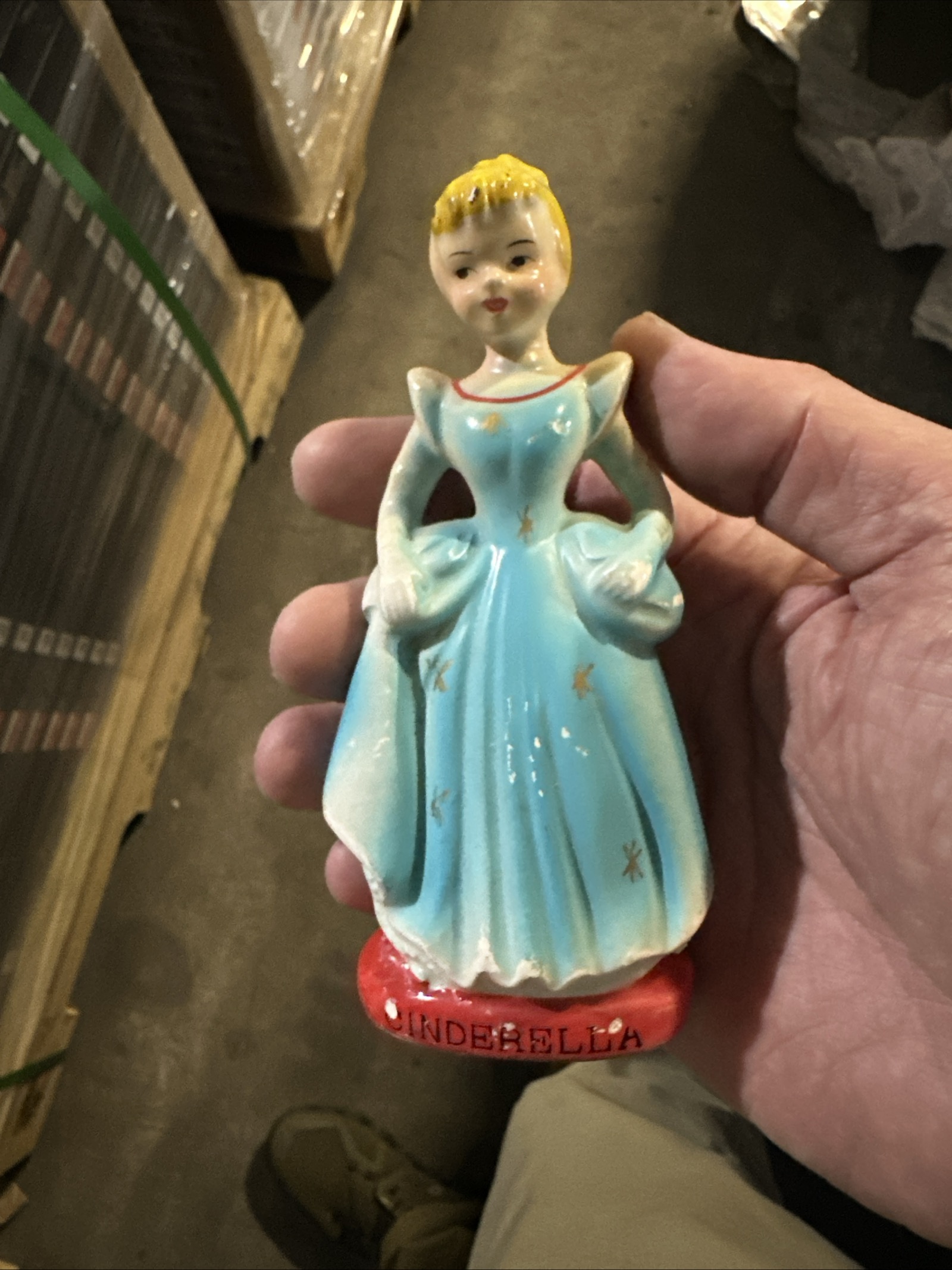
Long before Disney Store shelves were stocked with resin sculptures and limited-edition artist pieces, the princess figurines that sat on bedroom dressers and curio shelves across America were small ceramic treasures like this one. Standing approximately four to five inches tall, this mid-century Cinderella figurine captures the fairy-tale heroine in her iconic blue ball gown, rooted to a bold red base that is as much a product of its era as the figure herself. It arrived as part of a larger Disney estate collection, and it carries with it the quiet warmth of a home where Disney was genuinely loved — not curated for investment, but lived with.
Cinderella in the Golden Age of Disney Ceramics
Walt Disney's Cinderella, released in 1950, was a landmark moment for the studio. After the wartime years forced the animators into anthology shorts and modest projects, Cinderella was the full-scale fairy-tale feature that proved Disney could still conjure magic on a grand scale. The film was a commercial triumph and a cultural phenomenon, and the merchandise that followed reflected that excitement. Manufacturers licensed the Disney characters eagerly, and American ceramics companies — including well-regarded names like Napco and Lefton, both known for their hand-painted figurines — produced charming porcelain and ceramic pieces for the mass gift market.
Napco (National Potteries Company) and Lefton (George Zoltan Lefton Company) were among the most prolific producers of decorative ceramics in the 1950s and 1960s, importing many of their finished goods from Japan and hand-painting details to meet the American appetite for affordable, attractive home decor. A Disney license from either maker was a prestige partnership, and Cinderella — the studio's reigning princess of the decade — was a natural subject. Figurines from this period have a distinctive hand-finished quality: each piece is slightly individual, slightly imperfect, entirely charming.
The Figurine Itself
This particular piece presents Cinderella in her ball gown, the dress rendered in the soft, dusty blue that defines her screen appearance. The red base gives the composition a graphic pop that feels very much of its postwar moment — bold color blocking was a hallmark of mid-century decorative arts. At four to five inches tall, she is the right scale for a windowsill, a display shelf, or a shadow box. Paint wear is present on the blue dress, as you would expect from a piece of this age that was genuinely used and loved rather than sealed away in a box. The wear is honest: it tells you this figurine was someone's companion for decades, not a warehouse find.
The base of the piece should carry maker's marks — the bottom stamp or sticker (sometimes partially worn on older ceramics) is the key to confirming attribution between Napco and Lefton, both of which produced comparable Disney character figurines during this window. Either attribution places this firmly within a beloved and actively collected category of mid-century Americana.
Why Collectors Seek Out Mid-Century Disney Ceramics
There is a particular nostalgia attached to these early-era Disney ceramic figurines that newer, more precisely manufactured collectibles simply cannot replicate. They were made in a time when the Disney characters were still relatively new to popular culture, when Cinderella was something parents had taken their children to see at the cinema and then brought home in ceramic form as a keepsake. The imperfections — the gentle paint wear, the slightly uneven glaze — are not flaws to serious collectors; they are evidence of authenticity and age.
Mid-century Napco and Lefton Disney figures have a devoted collector base, and Cinderella pieces in particular hold consistent appeal because of the enduring popularity of the 1950 film. This figurine is especially interesting as an estate piece: it comes from a collection assembled over a lifetime, not assembled for resale, which means it was chosen because someone genuinely treasured it. That provenance — informal, human, real — is part of its appeal.
For the collector building out a mid-century Disney shelf, a Cinderella ceramics grouping, or simply looking for a piece with authentic postwar character, this figurine offers exactly the kind of tangible connection to Disney's golden era that mass-produced modern collectibles cannot provide. She is not perfect — and that is precisely the point.
Thinking of selling? Get a free, no-obligation offer.
One direct offer on your entire Disney collection — no commission, no auction wait. We help arrange the shipping.