A Snapshot of 1938: When Mickey Mouse Graced a National Stage
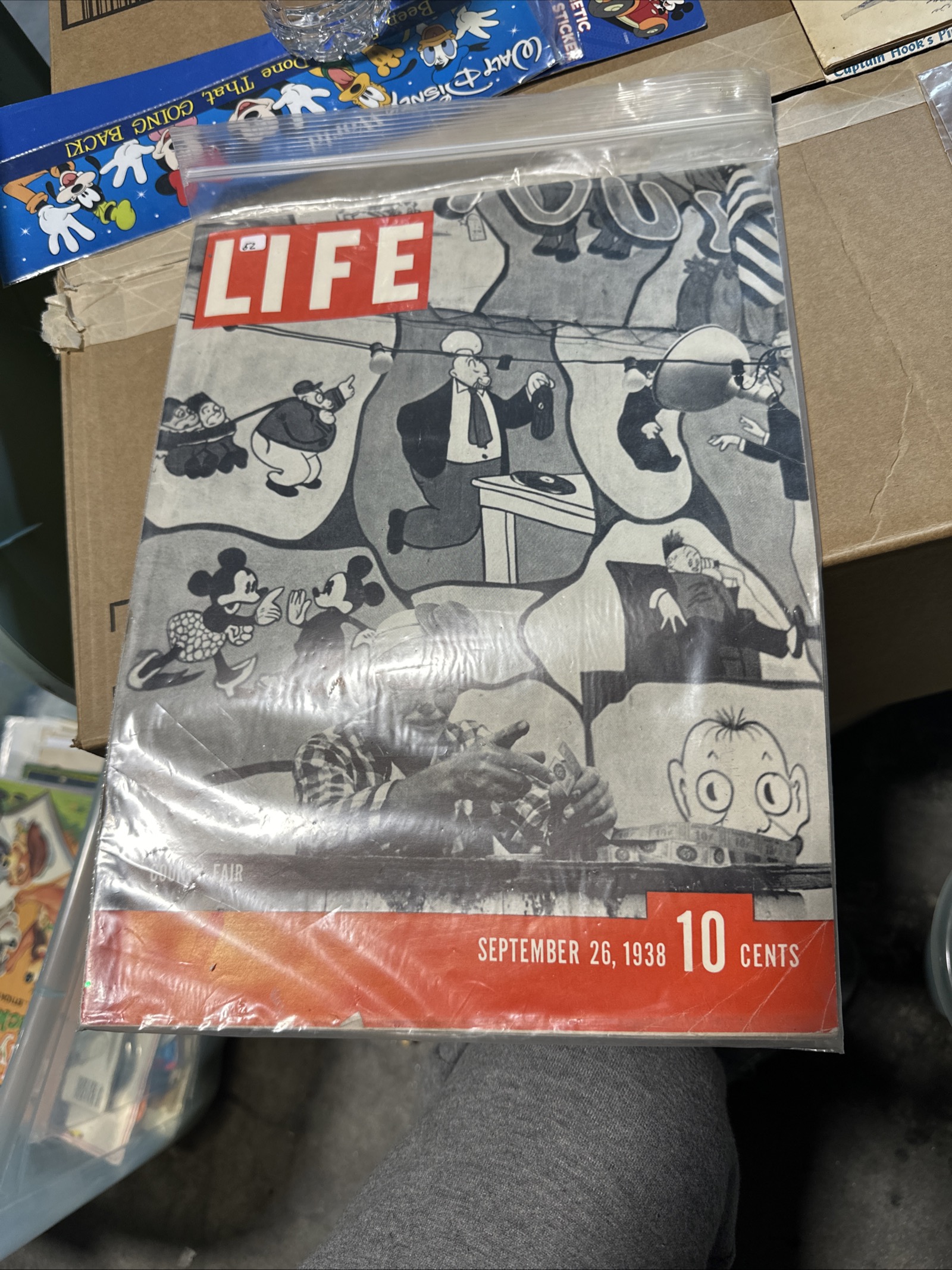
In the autumn of 1938, Walt Disney's beloved Mickey Mouse and Minnie Mouse were not merely cartoon characters — they were genuine cultural phenomena, recognized faces in households across America. This original issue of LIFE Magazine, dated September 26, 1938, captures that singular moment with a stylized county fair mural cover that places Mickey and Minnie in cheerful, festive company. Published by Time Inc. at the height of its influence, LIFE had only launched two years earlier in 1936, yet it had already become the defining picture magazine of the American century — its covers amounted to cultural endorsements. Seeing Mickey and Minnie on that cover was, for millions of readers, as natural as breathing: these characters belonged to the national conversation.
Golden Age Company: Mickey, Minnie, and the Animation All-Stars
What makes this particular cover especially extraordinary for collectors is the animated company Mickey and Minnie keep. Alongside Disney's iconic duo, the mural features Popeye, Wimpy, and Betty Boop — characters from rival studios, Fleischer Studios in particular, sharing the same festive scene. In 1938, animation was in full bloom. Walt Disney had released Snow White and the Seven Dwarfs just the previous year, the first feature-length animated film, stunning audiences and critics alike. Mickey Mouse, already a decade old as a character, was at the peak of his mainstream celebrity. Betty Boop, Popeye, and Wimpy brought their own legions of devoted fans. To see these animated universes converging on a single LIFE magazine cover is a testament to the cultural grip that the Golden Age of Animation had on American popular culture — a grip that, looking back, we recognize as one of the most creative and joyful eras in entertainment history.
The Object Itself: Honest Age, Enduring Presence
This copy is everything a vintage magazine collector respects: an honest survivor of nearly ninety years. The piece measures a generous 14 by 10.5 inches — the large, oversized format that gave LIFE its visual power and made its covers feel almost poster-like. A horizontal spine roll and subscription fold marks tell the story of a magazine that was read, handled, and cherished in its time — signs of a life lived rather than a sterile archive piece. The iconic red LIFE logo shows some scuffing, and the pages carry the warm yellowing consistent with paper from this era, before acid-free stock became standard. There is edge wear and minor chipping at the margins, and the piece has been thoughtfully stored in a protective plastic bag, preserving it from further deterioration. None of these condition notes diminish the piece; they authenticate it. A flawless 1938 magazine would invite skepticism. This one invites trust.
Why Collectors Prize This Piece — and Where It Fits in an Estate Collection
This magazine occupies a genuinely rare category: the cross-over collectible. For Disney collectors, it is a primary-source artifact from the Golden Age, featuring Mickey and Minnie in a mainstream national publication at the peak of their cultural relevance. For animation historians, it is a document of the moment when cartoon characters from competing studios could share a stage without it feeling strange — because all of them, for a brief shining decade, belonged to the same American imagination. For LIFE magazine enthusiasts, an early run issue with this much illustrated vibrancy is a genuine prize. And for collectors who simply love beautiful, storied objects from the late 1930s, there is something deeply appealing about holding a piece of paper that was printed, mailed, and read when the world was on the edge of enormous change.
This copy comes from a larger Disney estate collection — one of those remarkable assemblages that accrues over a lifetime of devoted, wide-ranging enthusiasm. Estate collections like this one often contain pieces that were acquired not as investments but out of genuine love, tucked away and nearly forgotten, emerging decades later still carrying the warmth of the era that produced them. That is precisely the character this magazine carries. It is not a museum piece sealed behind glass. It is a window — creased, faded at the edges, gloriously real — into one September week in 1938, when Mickey and Minnie Mouse stood at the center of American popular culture and the whole country was watching.
Thinking of selling? Get a free, no-obligation offer.
One direct offer on your entire Disney collection — no commission, no auction wait. We help arrange the shipping.